
Yara and Trafigura to collaborate on clean ammonia for shipping fuel
The MoU signed will see Yara work on supplying clean ammonia to Trafigura Group companies.

The MoU signed will see Yara work on supplying clean ammonia to Trafigura Group companies.

The UK government funding will be used to develop new modular Carbon Capture and Sequestration units that will accelerate emission producing industries’ ability to capture CO2 and produce zero carbon fertilizers.
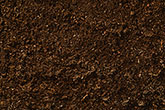
C.S.K. Mishra, Suryasikha Samal, Pratik Acharya, Stuti Pragyan Pradhan and Tanushree Moharana, Odisha University of Agriculture and Technology, explain why high antioxidant levels in farm soil could minimise the effects of chemical contamination on the biota.

Stamicarbon will develop green technologies and inform Shchekinoazot of their potential application, while Shchekinoazot will explore the introduction of green technologies at its existing or new enterprises.
The technology relies on renewable resources – instead of fossil fuels – to eliminate carbon from the ammonia production process.

The plant will be located near the country’s largest geothermal energy basin and will be partly powered by solar energy sources produced on-site.

The MoU includes plans to collaborate on the sequestration of already captured CO2 (CCS) at Yara’s ammonia plant in Pilbara, Australia, enabling the production and supply of blue ammonia to JERA.

The project is working towards realising a 1 tpd green ammonia pilot plant.
Under the terms of the MoU, KBR plans to integrate Cummins' proton exchange membrane electrolysis technology into its green ammonia solution, K-GreeN.
Scheduled for completion in 2023, the first concrete phase of the project will produce up to 625 t of renewable hydrogen and 3700 tpy of renewable ammonia.

The three companies have become limited partners in AP Ventures' Fund II, which invests globally in the hydrogen value chain from production to transport, through storage and to end use.
At an online signing ceremony, the companies agreed to explore opportunities for implementing Haldor Topsoe’s technologies at Shchekinoazot’s plants.

The UN Global Compact encourages its participants to adhere to a set of 10 universal sustainability principles.

Nutrien has also launched six commitments that aim to address the challenge of sustainably feeding a growing global population while protecting the planet, which include achieving at least a 30% reduction in greenhouse gas (GHG) emissions (Scope 1 + 2) per tonne of products produced.

The PROMETEO project will contribute towards decarbonising the energy, chemical and nitrogen fertilizer sectors, in line with the EU decarbonisation targets by 2030.