El Salvador has received 100 t of fertilizer from Morocco
El Salvador receives 100 t of fertilizer from Morocco that will contribute to agricultural production and food security in the country.

El Salvador receives 100 t of fertilizer from Morocco that will contribute to agricultural production and food security in the country.
Research teams from Iowa State University and Wichita State University are developing a system that captures waste nitrogen and carbon dioxide to produce a green fertilizer that reduces emissions of nitrous oxide.

Yara Germany, the Bindewald & Gutting Milling Group, and Harry-Brot have signed a cooperation agreement aimed at decarbonising cereal cultivation in Germany through the use of green fertilizers.
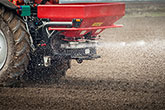
The company highlighted the role of the fertilizer industry by addressing global agricultural value chain challenges at the IFA conference in the Czech Republic.
Yara International has announced that it will build a new global production plant designed to increase yields and improve quality.
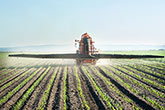
The industry prize fosters sustainable solutions for African agriculture.

NextChem Holding's subsidiary Stamicarbon (Maire Group) has been awarded new licensing and basic engineering design contracts for a green ammonia plant in the US.
Karen Proud, President and CEO, Fertilizer Canada, said that the recommendations support Canada’s agriculture sector and the important role it plays in global food security.

The hydrogen will be used as a feedstock for the production of green ammonia at an adjacent ammonia plant operated by Yara Pilbara Fertiliser Pty Ltd (YPF).
The agreement marks an important step towards making one of the most popular snacks in the country climate friendly.

The project will be certified through best-in case Verra-VCS standard and monitored by using a cutting-edge soil spectroscopy technology deployed to analyse the chemical and physical composition of soil, to tailor the approach.

The collaboration will focus on boosting plant resilience to combat escalating climate stress impacting crop production and farm economics.

The green hydrogen will be used to produce fertilizers, melamine and technical nitrogen at Borealis operations in Linz, Austria. The electrolysis plant is scheduled to commence operations in 2025, with projected annual CO2 emissions reductions of up to 90 000 t.

The certification indicates that the fertilizer plant in Manitoba, Canada, uses energy more efficiently than 75% of similar nitrogenous plants in the US and Canada.

The companies have agreed on the main commercial terms to transport CO2 captured from Yara Sluiskil, an ammonia and fertiliser plant in the Netherlands, and permanently store it under the seabed off the coast of Norway.