
What the Strait of Hormuz exposed about fertilizer security
Published by Oliver Kleinschmidt,
Deputy Editor
World Fertilizer,
Tim Schnabel, Switch Bioworks, examines how biological nitrogen could make fertilizer supply less vulnerable to geopolitical shocks.
A farmer in Iowa, US, can be thousands of miles from the Strait of Hormuz and still feel a disruption halfway around the world within days. Earlier in 2026, urea prices rose from roughly US$487/t to US$700/t as conflict slowed production and shipping in the Persian Gulf.1 Nothing has changed in the farmer’s field. The air still holds more nitrogen than the crop could ever use. What changed was access to the industrial system that turns it into fertilizer.
That’s the strange fact at the centre of modern agriculture. Nitrogen is everywhere, yet most crops cannot use it in its atmospheric form. Since the early 20th century, humanity has solved that problem by producing bioavailable nitrogen, principally ammonia, in large chemical plants. The Haber-Bosch process combines nitrogen from the air with hydrogen derived largely from natural gas at high temperatures and pressures. Ammonia is then converted into urea and other forms of nitrogen fertilizer before traveling through ports, rail networks and highways to reach the farm.
The system is extraordinarily productive. It is also concentrated. Roughly 35% of global urea exports pass through the Strait of Hormuz, along with significant volumes of ammonia and sulfur.2 Most nitrogen used on US farms is produced domestically. Domestic production still sits inside a global commodity market. Natural gas, ammonia, and urea prices respond to global supply and demand. When transit slows and supply tightens, freight and insurance costs rise, and the shock reaches farms far from the conflict.
Hormuz was not an isolated shock. Russia’s invasion of Ukraine sent fertilizer markets into the same scramble four years earlier. Different conflict, same exposure. The vulnerability is structural.
Whenever there is a fertilizer crisis, people start looking for an immediate solution. The reality is that there is not one.3 After Russia invaded Ukraine, the US Department of Agriculture (USDA) created a US$500 million fertilizer production programme.4 In 2026, it announced another US$500 million for domestic fertilizer expansion.5 Those investments matter. They also show how often the same vulnerability returns. We need to plan further ahead than the next crisis. A new ammonia facility takes years to finance, permit, build, and commission. A new agricultural technology also needs years of testing before a grower should trust it. Resilience must exist before the emergency.
The contradiction
Within the fertilizer industry there is a fundamental contradiction. Nitrogen surrounds every field, yet crops still depend on a concentrated, energy-intensive industrial system to access it. Switch Bioworks’ approach has been informed by three approaches: chemical engineering, economics, and bioengineering. Each discipline revealed a different part of the same system. Chemical engineering explained how humanity learned to make ammonia at enormous scale. Economics showed how energy prices and trade routes determine who can afford it. Biology opened a different possibility. The factory could live on the plant itself.
That possibility became the question; could microbes make usable nitrogen at the root, where crops need it? Subsequent research focused on engineering free-living microbes to produce ammonia for plants. Eventually, the work led to the founding of Switch Bioworks.
The deeper one goes into industry, the more fertilizer looks like an infrastructure problem hiding inside a bag of farm inputs. Governments tend to discuss fertilizer when prices spike. Growers live with its economics every season because fertilizer is one of their largest input costs. In the US, a shock can quickly compress a grower’s margin and change planting decisions. In Nigeria, Kenya, Zambia, and Tanzania, there are farmers who use a fraction of the fertilizer applied on American farms.6 Access there can determine how much food a community grows. Livelihoods are at stake.
A different geography for nitrogen
Governments are right to invest in domestic manufacturing and secure trade routes. Conventional nitrogen will remain essential for years to come. More domestic capacity would reduce some exposure; however it cannot remove every dependency. A domestic ammonia facility still needs energy. Its output remains connected to global commodity prices and still has to travel before reaching a crop.
Biological nitrogen fixation introduces a highly distributed production model. Certain microbes can pull nitrogen from the air and convert it into ammonia. If those microbes establish on crop roots in high numbers and release nitrogen the plant can use, part of the crop’s nitrogen could be made in the field, powered by energy from the plant.
That changes the map. A portion of nitrogen production could eventually be spread across millions of acres instead of concentrated in a handful of chemical plants. Producing nitrogen at the root is not tied to a gas pipeline, a port, or a narrow shipping lane. For farmers, that could create another source of supply when industrial fertilizer becomes expensive or difficult to obtain.
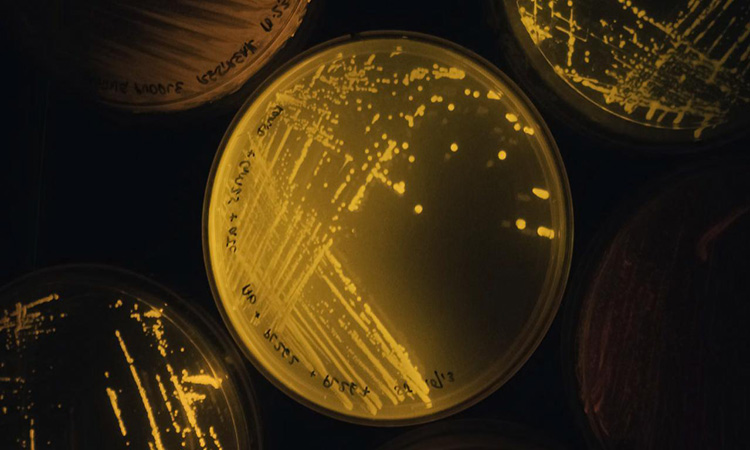
Figure 1. Microbial cultures from Switch Bioworks’ research into nitrogen-fixing organisms for agriculture.
The hard part is getting the timing right
Biology has promised this for decades and underdelivered. The first engineering problem is getting microbes to share the ammonia they make. Most microbes keep the nitrogen they fix because they need it for their own growth.7 Many products on the market rely on un-engineered strains, which means little of that nitrogen reaches the plant. Engineering microbes to release ammonia solves that problem.8
That engineering creates another problem. Microbes need energy to grow, compete in the soil microbiome, and establish on plant roots. Fixing nitrogen and releasing ammonia take a great deal of energy. The more energy the microbes spend producing ammonia, the less they have to survive and reproduce. A strain can look impressive in a flask and disappear when it meets the complexity of a field.
Switch started by building a biobank of thousands of microbes isolated from corn plants in the Midwest and other growing regions.7 The company was looking for organisms already suited to life around plant roots. Then it had to figure out how to engineer them. That was a difficult challenge because these were wild microbes that had never been domesticated for the lab. Once that had been cracked, Switch programmed their genomes with genetic switches that separate growth from ammonia production. The microbes establish first, then switch on nitrogen production.
Establish first. Switch. Produce second. That is the logic behind the company’s name. Each time the microbial population doubles, there are twice as many potential nitrogen-producing cells on the roots. 10 doublings can turn one cell into more than a thousand. Timing lets the microbes build that population before asking them to do the energy-intensive work of ammonia production. After just a couple of days in controlled grow-room studies, the company measured more than five times as much nitrogen fixation on plants inoculated with its switchable strains as on plants inoculated with always-on control strains. The individual cells fixed nitrogen at comparable rates. The difference was that the switchable population had time to grow first, so there were many more nitrogen-fixing cells at work.
USDA and Environmental Protection Agency (EPA)-authorised multi-site corn field trials are underway in the US Midwest, evaluating the technology under real agricultural conditions.9 That is where the idea has to survive weather, soil variability and competition from the rest of the microbiome.
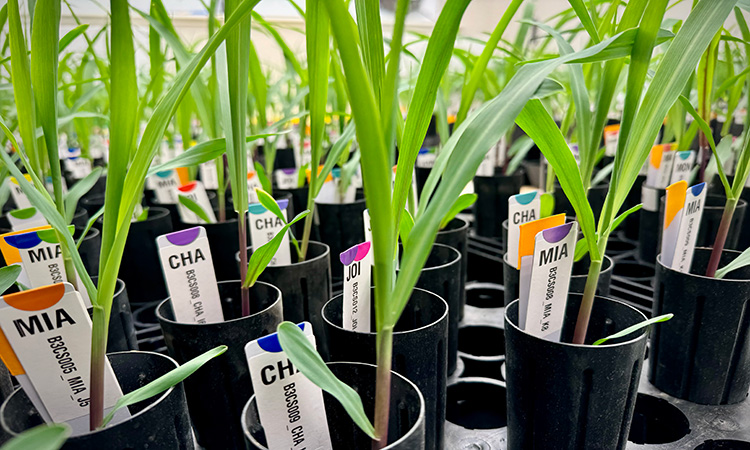
Figure 2. Corn plants used in Switch Bioworks’ controlled-environment research.
The field has the final say
The current fieldwork asks basic questions before it asks commercial ones. Do the microbes survive? Do they establish on roots across different soils? Does the switch activate as designed? Is nitrogen produced where and when the plant can use it?
The company does not have field yield data yet, and these are not yield trials. Yield analysis comes after it has been shown that the underlying biology works consistently outside a controlled environment. That sequence matters. Biological inputs have earned scepticism when ambitious claims arrived ahead of repeatable field evidence.
Performance in the ground is only part of the job. A successful product also has to fit the way farming actually works. The product has to survive manufacturing and storage, integrate into established workflows, and make economic sense for a grower. If the biology works but the product complicates planting, it has not solved the problem.
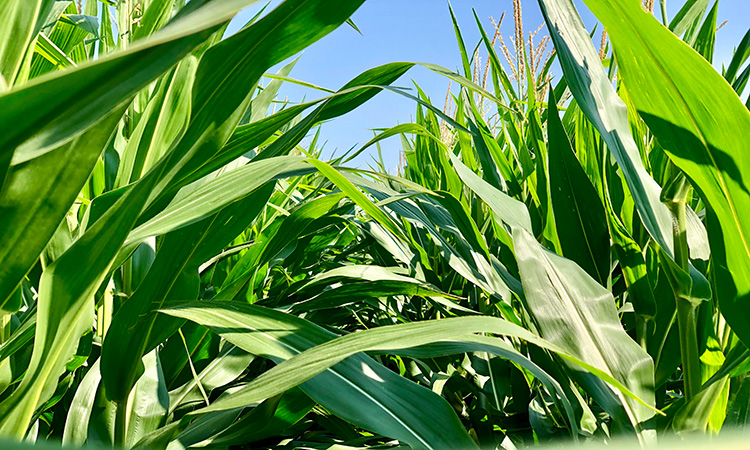
Figure 3. Corn, the first crop targeted by Switch Bioworks’ microbial nitrogen platform.
Build the second source before it is needed
Biological nitrogen can complement industrial fertilizer by giving growers a second source that relies on different infrastructure. Even a partial contribution matters when it is distributed across major growing regions. It can reduce growers’ exposure to global price shocks and create more flexibility when conventional inventories tighten.
This is the part policymakers often miss. Fertilizer security cannot be measured only by the number of domestic ammonia facilities. It also depends on how many independent routes a farmer has to usable nitrogen. A resilient system has industrial capacity, dependable logistics, and field-level production working together.
The Strait of Hormuz made the vulnerability visible. It did not create it. Every fertilizer crisis sends the industry searching for a fast answer, even though the meaningful answers require years of work. Companies should keep strengthening conventional infrastructure and build biological capacity to make nitrogen close to the crop. A chokepoint thousands of miles away should not get the final say over how much nitrogen reaches a field.
References
- https://www.theguardian.com/world/2026/mar/14/global-food-supplies-iran-war-fertiliser-yara-svein-tore-holsether
- https://www.ft.com/content/7efe2060-8112-47aa-ad33-628ed2eb80ed
- https://globalaginvesting.com/in-conversation-with-switch-bioworks-ceo-tim-schnabel/
- https://www.fsa.usda.gov/news-events/news/09-28-2022/biden-harris-administration-makes-500-million-available-increase
- https://www.usda.gov/about-usda/news/press-releases/2026/07/01/secretary-rollins-announces-500-million-fertilizer-investment-and-expansion-program-strengthen
- https://www.fertilizerdaily.com/20250213-switch-bioworks-tim-schnabel-we-dont-sell-fertilizer-we-create-the-thing-that-makes-the-fertilizer/
- https://engineering.stanford.edu/news/using-natures-miracle-bugs-help-feed-world
- https://journals.asm.org/doi/10.1128/aem.00582-21
- https://www.prnewswire.com/news-releases/switch-bioworks-advances-novel-microbial-fertilizer-into-first-in-class-field-trials-302790309.html
Read the article online at: https://www.worldfertilizer.com/environment/16092026/what-the-strait-of-hormuz-exposed-about-fertilizer-security/