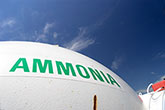
KBR provides ammonia technology for Argentinian facility
KBR’s ammonia technology has been selected by Pampa Energía for its facility in Argentina.

KBR’s ammonia technology has been selected by Pampa Energía for its facility in Argentina.

The MEPA has approved of the start of operations for the Mulalo Granular fertilizer production facility in Mchemela, Dowa District, Malawi.
Topsoe has signed an agreement to deliver its technology for J Westling & Co’s blue ammonia fertilizer project in Gothenburg, Nebraska, US.

ACME and IHI have signed a Joint Venture agreement to secure the Japanese Government’s CfD subsidy for green ammonia project in Odisha.
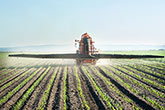
Faraday Earth has developed a new plasma-based green ammonia production system which could reach a levelised cost for ammonia of around US$500/t.

Yara International ASA has reached an agreement to acquire Gulf Coast Ammonia's ammonia production facility in Texas City, Texas, US, from GCA Holdings LLC.
Yara has provided an update on US ammonia project and capital allocation.

CASALE has become part of a pioneering coal-to-ammonia-nitrates project in Odisha, India.

Against a backdrop of increasing geopolitical risks to food supply chains, Joseph Ely, Latent Drive, explains how new hydrogen technologies can combat these risks and help to remove the reliance on global fossil gas supplies to produce fertilizer.

thyssenkrupp Uhde has completed an ammonia converter cartridge and catalyst replacement for IGSAS in Türkiye.
Prayon has published its 2025 sustainability report, confirming its long-term commitment to sustainable world.

thyssenkrupp Uhde has signed pre-FEED contracts with Fuella AS for two large scale green ammonia projects in the Port of Pecém and the Port of Açu, Brazil.

Switch Bioworks has announced the launch of field trials of its microbial fertilizer aiming to reduce reliance on conventional chemical fertilizers.

DNV has advised lenders on financial close of the US$650 million Villeta green hydrogen fertilizer project in Paraguay.
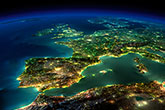
Fertilizers Europe has released a statement on the suspension of MFN tariffs on fertilizers.